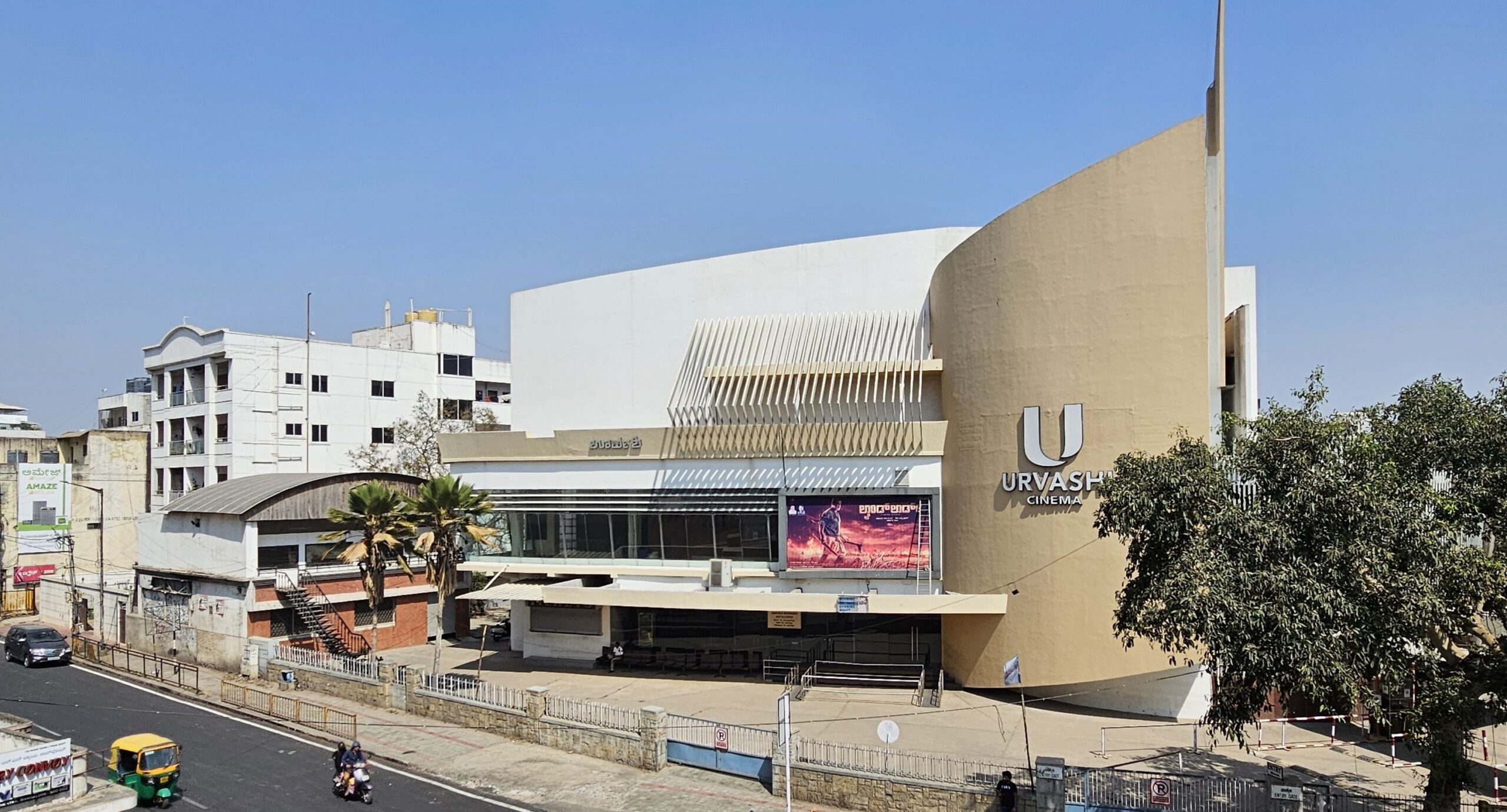
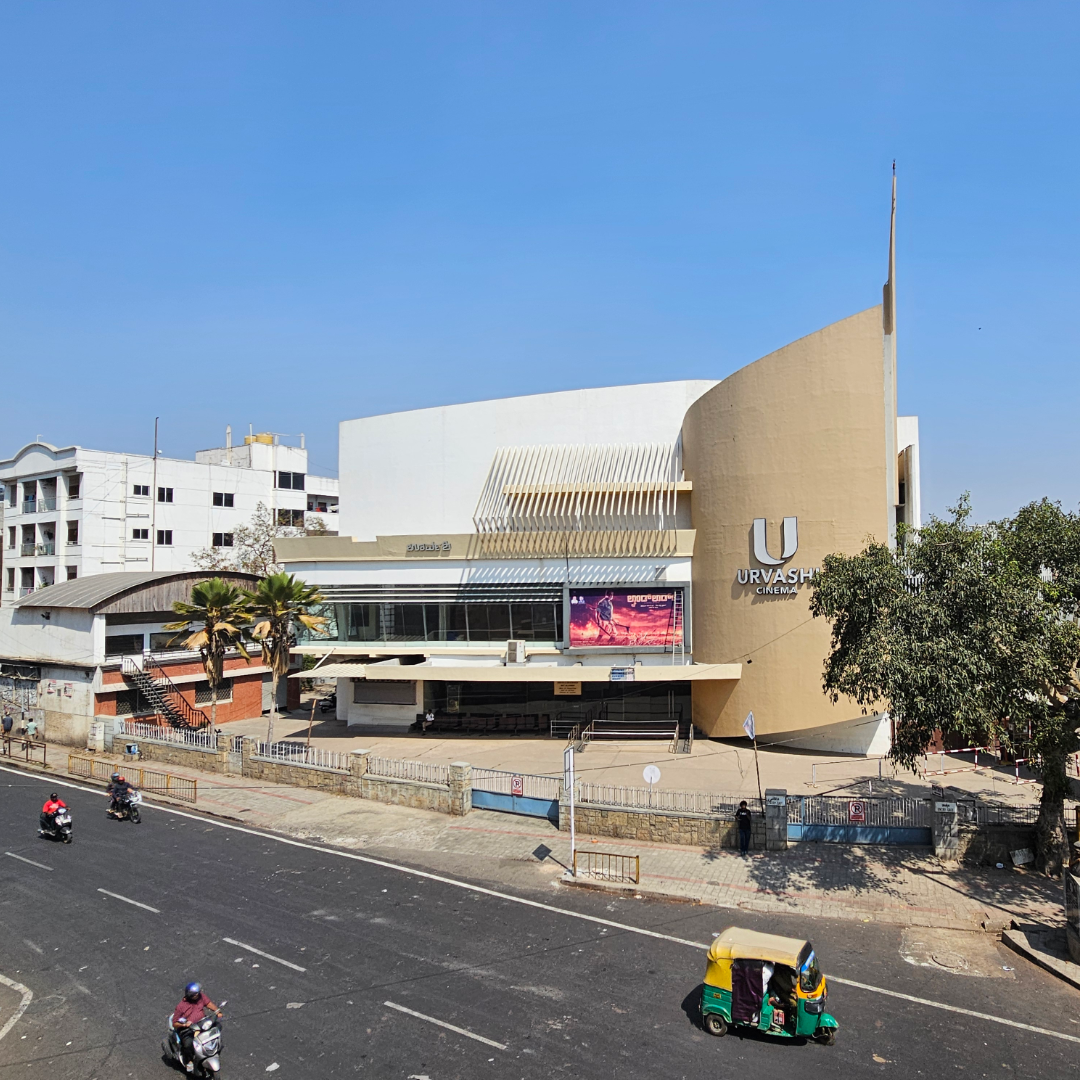
Theatre Urvashi near Lalbagh is being demolished screamed the headlines as one more landmark bit the dust. The landscape of Bengaluru’s cultural history is undergoing a quiet but profound transformation as its iconic single-screen theatres rapidly fade into oblivion. Decades before streaming algorithms and mall multiplexes fragmented the audience, these historic theatres served not just as entertainment venues, but as architectural anchors of the city’s social life. Revisiting their histories is not just an exercise in nostalgia, but a tribute to the shared spaces where moviegoing was an event of communal magic.
Text by Arvind Krishnaswamy
What is common between Winston Churchill’s arrival in the city, inception of Minto Hospital, supply of water from Arkavathi to the city and the construction of Elgin Hall?
All of these occurred in 1896 in the history of Bengaluru. Historically speaking, Elgin Hall can be called as the birthplace of single-screen cinema theatres in Bengaluru. The early theatres were primarily concentrated in the Cantonment area to cater to British troops and Anglo-Indian residents, screening Hollywood imports and European silent movies. Later, the city’s entertainment split geographically focused on two roads whose names differed only by one alphabet – K G Road and M G Road. Kempegowda Road was the heartland of Hindi, Kannada and other regional language films. Mahatma Gandhi Road catered to fans of English films. Let’s rewind and go through the rise and fall of single-screen theatres in these four sections.
1900 – 1940
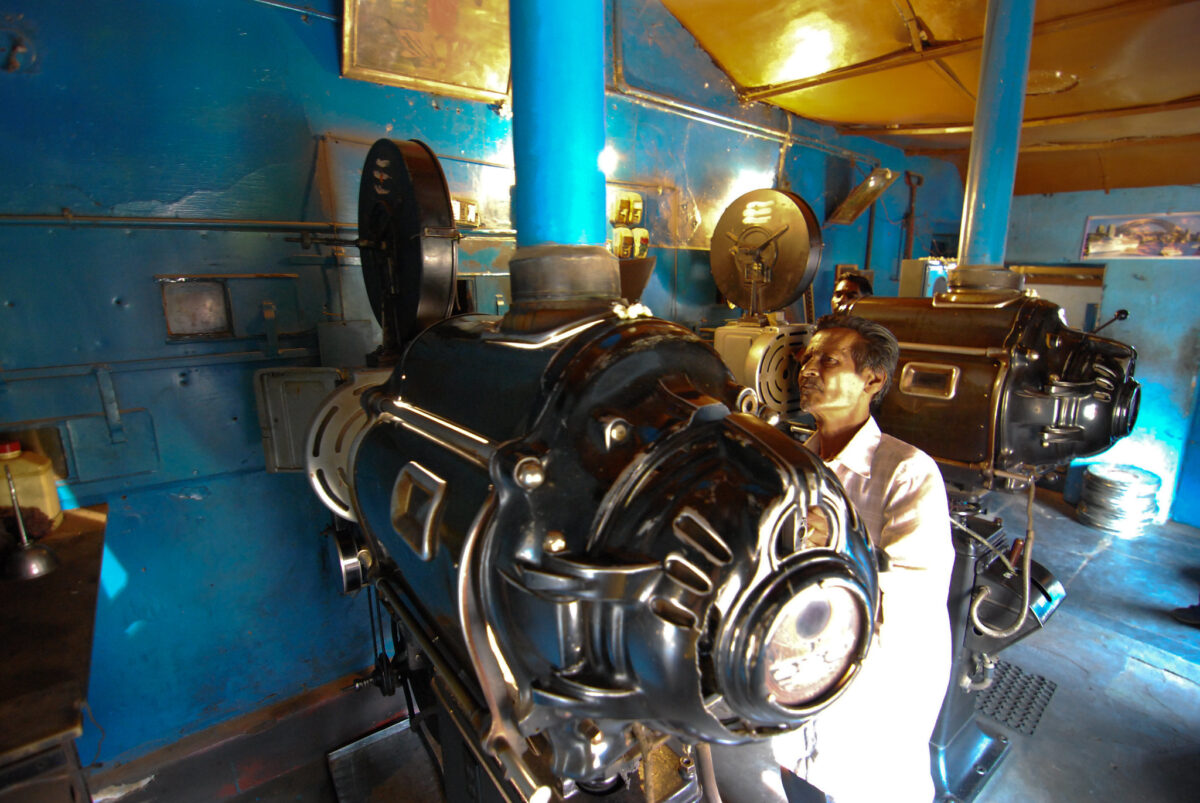
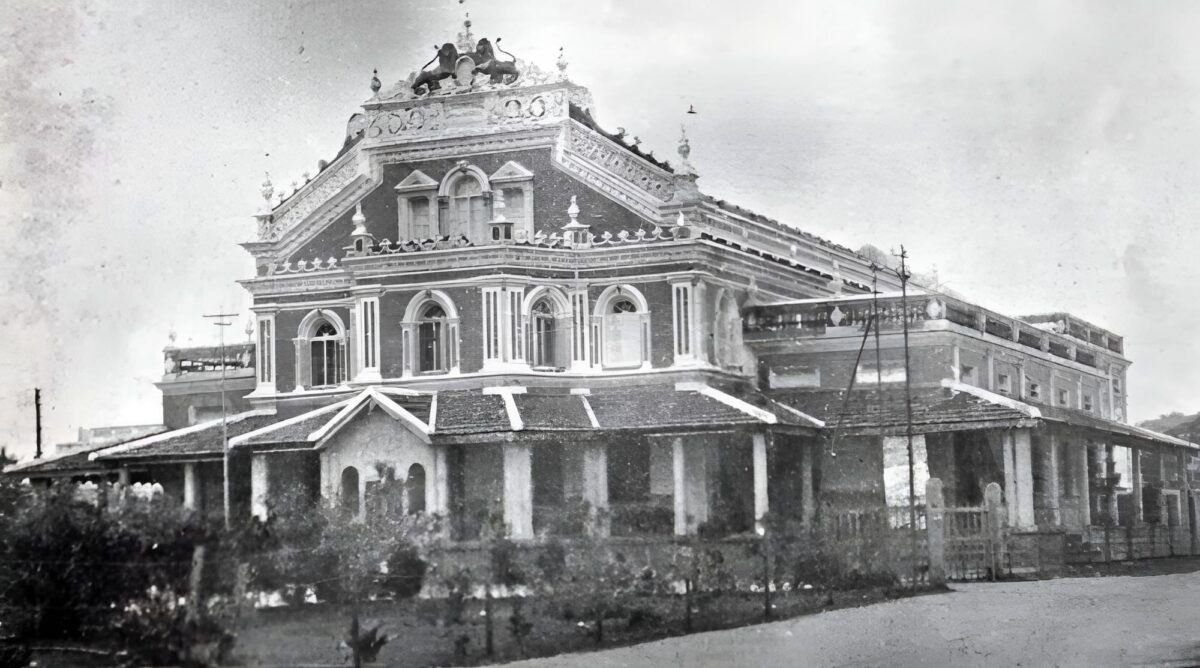
Elgin Hall was built by Veerabhadra Mudaliar, just one year after cinema was invented. At least five generations of Bengaluru would have walked past the colonial structure close to Shivaji Nagar bus stand, before it was demolished. The auditorium named after Lord Elgin – the second British Viceroy to India – was initially used as a warehouse and later for plays and other entertainment shows. It was also the venue for meetings of myriad groups such as the Bangalore Temperance Club, aimed at curbing the use of alcohol in the city. Elgin witnessed the entire history of modern cinema starting with carbon-arc projectors and heavy film canisters. For over a century, dust motes danced in the beam of light cutting through the darkness toward the screen and entertained cinegoers. The 400-seater auditorium had a separate entrance and seats for women. For many years, it was the theatre of choice and the first talkie Alam Ara was also screened here in 1931. Eventually, the name was changed to Elgin Talkies to denote cinema with sound. Until it was closed in 2011, it was run by the same family. The superstars of yesteryears Dilip Kumar and Ashok Kumar visited Elgin on many occasions.
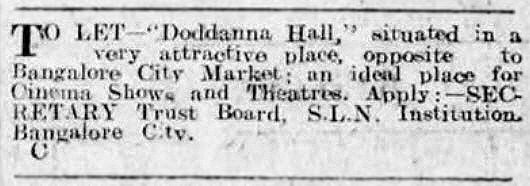
Doddanna Hall was the second theatre to screen films. It was built by Janopakari Doddanna Setty as a school and a multipurpose cultural centre. Located in the City Market area, it was inaugurated by Maharajah Krishnaraja Wodeyar on March 11, 1906. Initially, it was used for a variety of public events, dramas and even wrestling shows. Then, it was converted to a full time cinema theatre and the name was changed to Cinema Gaiety. The first Kannada talkie Sati Sulochana was screened here in 1934. Later, it was renamed as Paramount Talkies until it was demolished in 1974 and the twin theatres Parimala and Pradeep were built in its place.
In 1928, the Majestic talkies was built at Balepete. It had a total seating capacity of 1,073 with the lowest ticket priced at 5 annas (approximately ₹0.30) and the highest at 1 rupee and 8 annas (approximately ₹1.50). This became such a famous landmark that the entire area around Kempegowda Road is colloquially known as Majestic and it is arguably the busiest and most well known gateway to the city even today. Majestic and Sagar were owned by Ambalal Patel, a distributor of films, who was in the bicycle business.
By 1938, the city had about a dozen theatres – Excelsior, Majestic, Paramount, Sagar and Select (later Geetha) were located in the city area whilst BRV, Globe (later Liberty), Lakshmi, New Empire, New Imperial, Palace (later Renuka) and Plaza were in the cantonment. As in many other aspects, the British practiced open racial discrimination even in watching films. Some theatres in the Cantonment area displayed signs that the best seats were reserved for Europeans in open racial discrimination. Did you know that the Imperial theatre proudly advertised that it “caters purely for Europeans” even in 1927?
1940 – 1970
The 1940s saw more theatres being constructed and slowly extended to areas beyond city or cantonment. H S Ranganna started the 700-seat Vijaya (later Vijayalakshmi) in Chickpete and this was followed by the 605-seat Minerva talkies which opened at Mavalli Circle on January 15, 1941.
The second half of the decade saw Sharada Talkies open on November 24, 1946 at Nagarthpete, Kempegowda Talkies in November 1948 and Bharat Talkies two years later in 1950. Bharat Talkies was known to run mostly Kannada films all through the year. As an example of how these theatres nurtured growth of good cinema, R Lakshman who was a manager at Bharat became close to Dr Raj Kumar and produced Bangarada Manushya with K A Gopal. The film became such a success that it ran for two years at the States theatre. Incidentally, States Picture House (as it was called then) opened in 1946, was designed by the noted architect T S Narayana Rao. He was a protege of SH Lakshminarasappa, who built the Puttanna Chetty Town Hall.
Theatres were built at a steady pace even amidst the cement and steel shortage during the post World War years. Kempegowda Road was seen as the hub of good cinema and theatres. In his book Dream Merchants, Politicians and Partition (Harper Collins, 1997), noted film critic Iqbal Masud wrote “…during the fifties, I discovered Satyajit Ray and Guru Dutt. Bangalore had lovely cinema houses on the main Kempegowda Road (KG Road). It was a decent, civilized road then, not the unpleasant mess it has become now. The cinema theatres were spacious and comfortable and offered good eats – an essential element of a good theatre.”. A filmgoer who concurred with this opinion wrote, “Prabhath, which since its opening a decade ago, has maintained a very high standard of efficiency and cleanliness. It can boast of the best of seating arrangements and best of comfort.”. Alongside the credit, there were also some complaints about the lack of facilities for the “high” ticket prices (which was around ₹1 for balcony). One viewer complained that Kempegowda talkies was a triangular building with a lot of corridors resembling dungeons and it looked more like a monastery than a cinema hall. He added that it was supposed to be air conditioned, so there were no fans. But the fans were either not working or inadequate and it became unbearably hot even in winter.
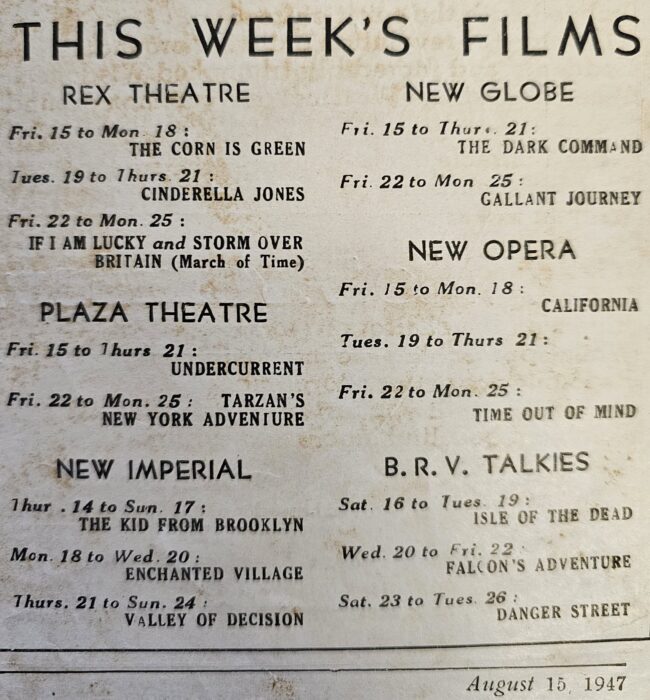
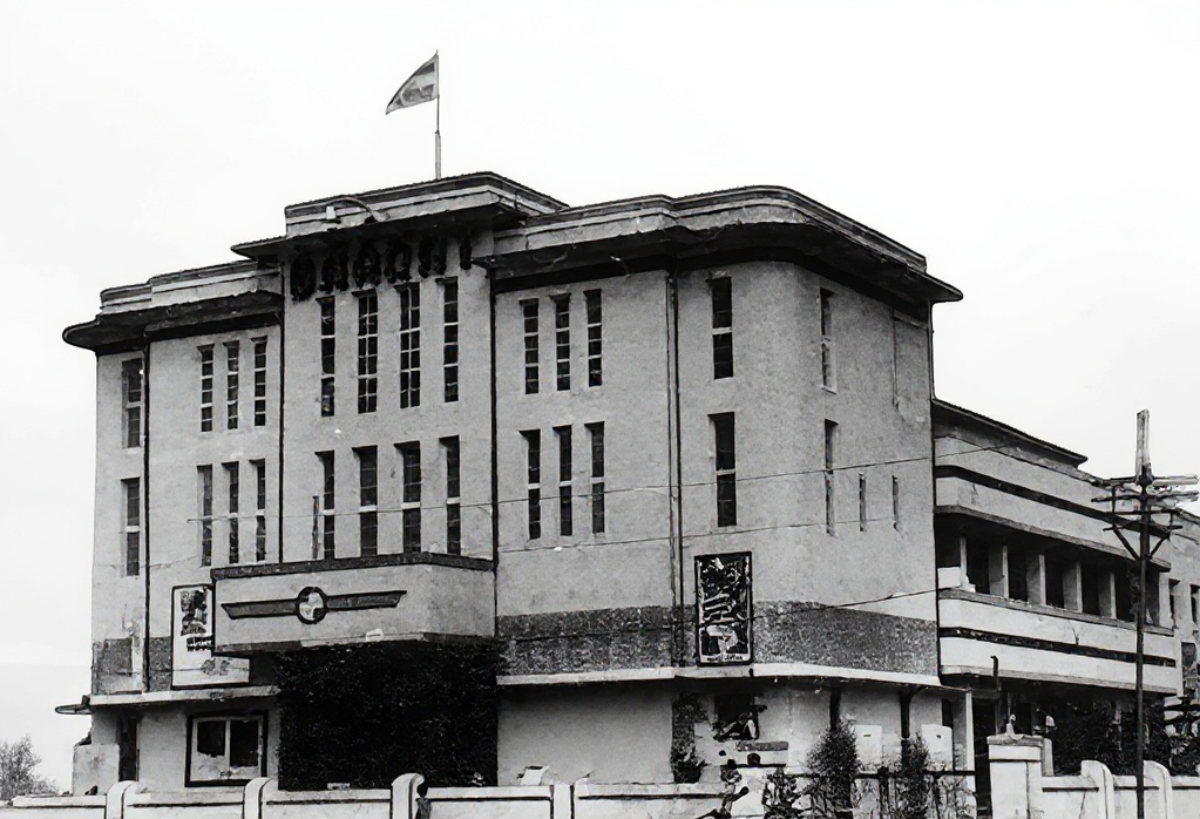
The glamour and potential profitability of cinema attracted many people to invest in building theatres. Jayantilal Thakore was a film distributor of V Shantaram’s films in South India through Alankar Chitra and Famous Pictures. He owned Prabhath (opened 1940) and Alankar (opened 1957), widely considered to be two of the best cinemas in the city at the time. Prabhath talkies had the familiar symbol of a girl blowing a horn during a sunrise (modelled by Marathi actor Shantabai Deshmukh) on top of the building. Alankar was considered to be one of the best maintained auditoriums and it was designed by the noted Art Deco architect Gajanan Baburao Mhatre, well known for many of the heritage buildings on Marine Drive in Mumbai. Unlike the multiplexes of today that are hidden inside malls, single-screen theatres were prominently visible structures with their own individual styles and unique features. Grand lobbies, gardens, fountains and architect designed plush interiors were seen in some theatres. By 1959, Bengaluru had more cinema halls per head than anywhere else in India.
During the 1960s, more theatres were built outside the core city and cantonment areas. Theatres became bigger in size and many exceeded 1,000 seats. Navrang in Rajajinagar was owned by K C N Gowda, who came from a silk farming family of Doddaballapur. The family also owned K C N Silks and Shantala Silk House in Bengaluru. Navrang was advertised to be the first 70 mm theatre in South India. The story goes that K C N Gowda offered free bus rides from Majestic for viewers as there was no regular public transport service to Rajajinagar in those days. Sangam theatre owned by film distributor Ramananda Narayanrao Mandre of Mandre Pictures opened in 1967 on Tank Bund Road in the Majestic area. K N Srinivasan designed Sangam in both Bengaluru and Mysuru. Inspired by the ramp in Guggenheim Museum during a visit to New York, he added ramps to many theatres he designed. The 1,473-seat Kapali (probably the largest theatre ever built in the city), opened to the public on February 16, 1968. It also had the fame of being the first and only 3-projector Cinerama theatre in India. Screens in cinema theatres became larger with the invention of Panavision, CinemaScope and 70 mm films. Kapali was gigantic in every aspect with the screen measuring 59 feet by 27.5 feet – probably thrice the size of the tiny screens in Plaza and Rex. This was ideal for showing films such as David Lean’s Lawrence of Arabia or Raj Kapoor’s Around the World or G P Sippy’s Sholay.
Triveni, called the Show Palace of Bengaluru, also opened in the same year. It was owned by B C Venkataramanaiah Setty and P S Nagabhushanam of Aruna Agarbatti Company. Triveni, also designed by architect G B Mhatre and is one of the few surviving theatres in the Majestic area today. Swastik and Central theatres came up in Seshadripuram and Jayanagar had its first theatres when Nanda and Shanthi opened around 1966. Going by the entertainment tax returns between 1966 and 1970, the five most popular theatres in the city were Rex, Sangam, Kalpana, Lido and Majestic. These three decades saw a steady growth – from about 24 theatres in 1945 to 32 in 1950 and 43 by 1963.
1970 – 2000
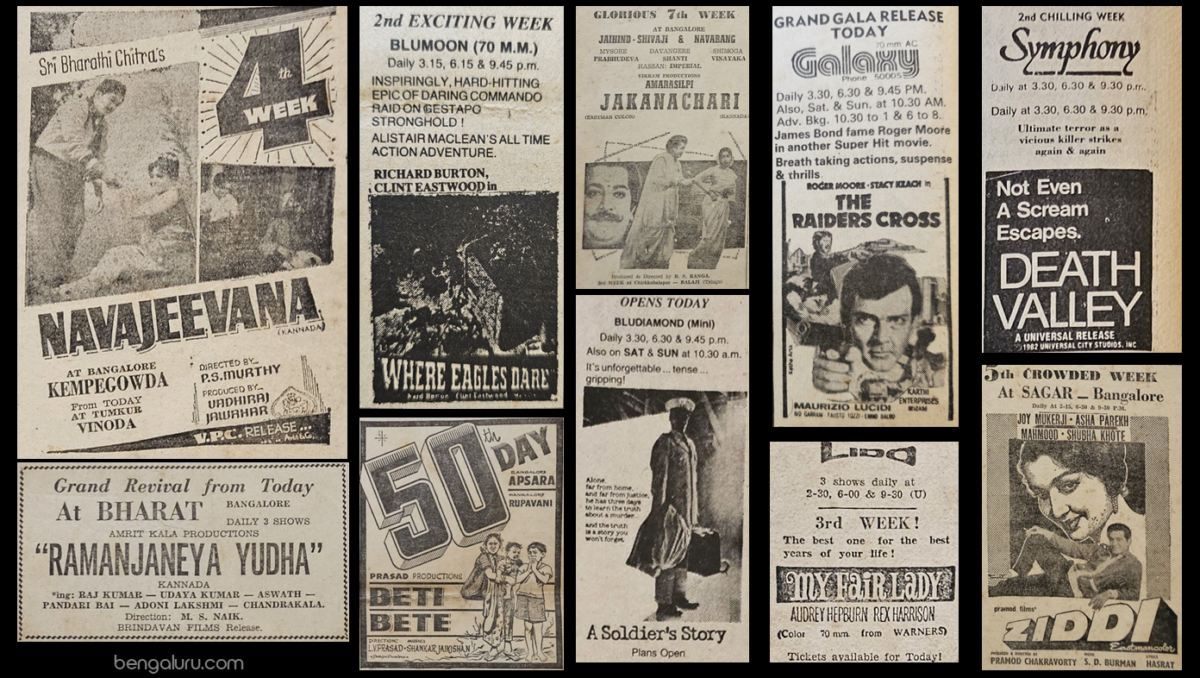
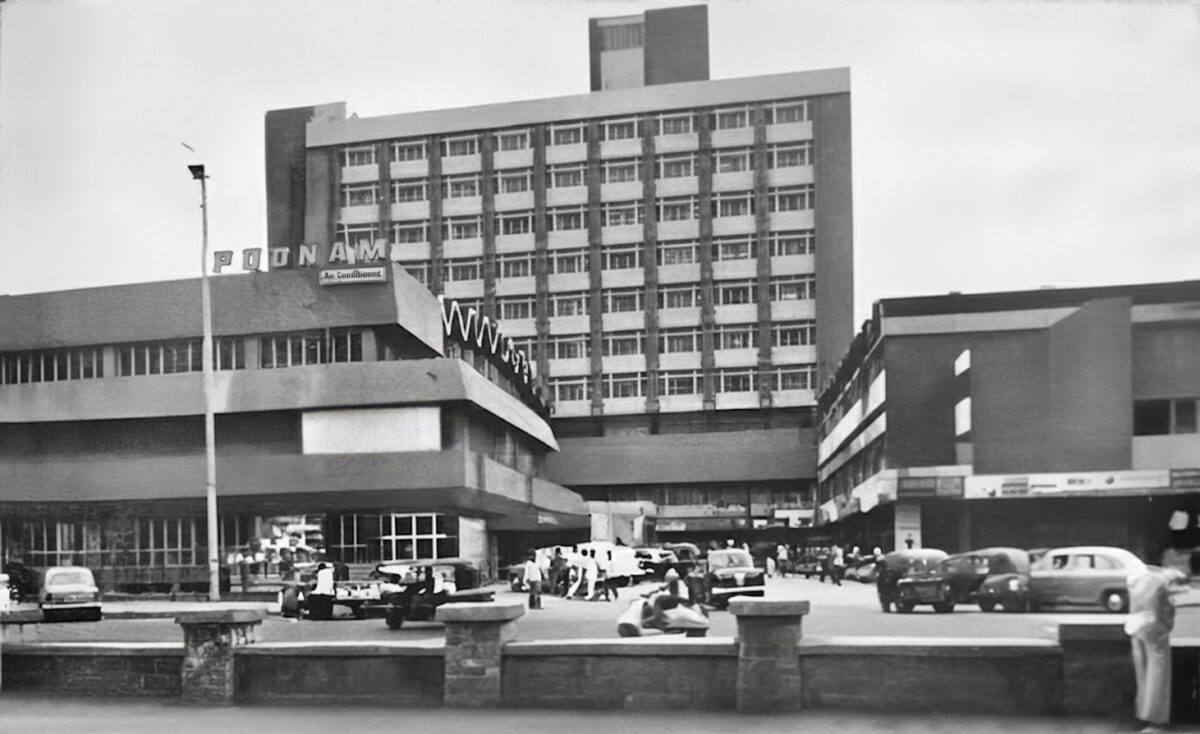
This was the peak and glory of single-screen theatres in Bengaluru. During this period, the city more than doubled the number of theatres. Cauvery with 1,300 seats opened on Sankey Road in 1972. Uma opened in the same year on Bull Temple Road, Chamarajpet and was famous for screening Kannada films in the traditional, conservative area of the city. Bishen Das (of B. Das and Co, a sanitary ware business on J C Road) built Galaxy, which opened its doors in 1971. The design of Galaxy theatre by K N Srinivasan was unusual. Even though viewers climbed up a circular ramp to the “balcony” seats, it was only at a higher elevation on the same floor and not one floor above as in other theatres. Srinivasan was also the architect of Santosh, Blumoon and Pallavi, which was inaugurated by Dr Raj Kumar on March 6, 1976. Symphony and Poonam opened when the Public Utility Building and the Jayanagar Shopping Complex were constructed in 1974.The 1,200 seat Urvashi theatre, also owned by K C N Gowda opened in 1976.
The 1970s also brought the concept of twin theatres (one big and one small) in the same building. We had Parimala and Pradeep at the old Paramount site in City Market, Narthaki and Sapna on Kempegowda Road, Tribhuvan and Kailash in Gandhinagar, Blumoon and Bludiamond on Mahatma Gandhi Road and Sampige and Savitha in Malleshwaram. Twin theatres were the precursor to the multiplex theatres prevalent today. The larger of the twin theatres was the choice for blockbuster or multistarrer films that drew large crowds and the smaller one was usually used for low budget or art films.
Another unique single-screen theatre was the open air Drive-in theatre on Bannerghatta Road. Constructed on a 9-acre land in what was then the outskirts of the city in 1978, it became a novelty for people who owned cars. However, it was built in a mostly deserted area notorious for its mosquitoes. Can you imagine that today it is where Subramanya Arcade is located on one of the most congested roads of the city with the Pink Metro line bisecting it?
As the popularity of theatres grew, they got embroiled in many issues. Cases of tax, ownership and land lease disputes had become quite common ever since theatres opened for business decades earlier. Aside from these, there were other interesting conflicts. In 1977, just three years after Poonam theatre opened in Jayangar, its lease was terminated and eviction proceedings were initiated on the lessee who owed money to Syndicate Bank. When fresh tenders were called to run the theatre, the old lessee submitted a proxy bid in the name of a school teacher in Tumkur and was awarded the contract again! Not only that, but old employees were thrown out when they demanded back wages and hired new ones in their place! Sadly, Poonam folded up after a few years and it was renamed as Puttanna Kanagal Chitramandira. Even this was shuttered and efforts by Vishnuvardhan and Ambarish to revive it also failed.
Language was another controversial subject in cinema. In 1979, the Karnataka Government issued a notification mandating screening Kannada films for 12 weeks in a year. Theatre owners of Rex, Plaza, Lido, Galaxy, Blumoon and Bludiamond in the Cantonment area went to court and obtained a stay order as they were unable to attract enough viewers in those areas. Man-made disasters also impacted show business. On September 12, 1983, the under construction seven-storey building belonging to N Gangaram (Bangalore Book Bureau) collapsed partially on Kapali theatre and the theatre had to shut operations for some time.
In 1986, The Illustrated Weekly of India magazine selected the eleven best film theatres in the country and two from Bengaluru that made the list were Lido and Pallavi. “A neatly maintained garden with a small lawn in front of the building adds to the colonial atmosphere” was how the 839-seat Lido theatre on Old Madras Road was described by the magazine. The 1,211-seat Pallavi built in 1976 was praised for its “soft well upholstered seats, good projection and ventilation and its annual maintenance that kept the glass windows, lobbies, winding ramps looking almost as good as it did when they were built”.
Bengaluru’s single-screen theaters witnessed exponential growth during the period. Long before it became India’s tech hub, Bengaluru was a booming theatre town. The city had 54 theatres in 1971, 84 in 1980s and by 1990, the count became 93 theatres. As many as 17 theatres were located in a stretch just one km of Kempegowda Road. Vaibhav was probably the city’s last new single-screen theatre when it was built at Sanjay Nagar in 1999.
2000 – Today
The downfall of single-screen theatres started in this period. With the onset of DVDs, Cable TV at first and OTT later, theatres became financial white elephants. Diminishing box office collections, bad films and increasing tax rates also impacted business. Rent for a theatre in the Majestic area was as much as ₹5 lakhs per week. So, a movie screened had to make significantly more than that to be profitable. The owner of Sagar theatre said that only 30% of the 1000-seat theatre would be filled for many films. Theatre owners had to carefully manage ticket prices depending on the type of audience.
When Rex theatre raised ticket prices from ₹30 to ₹43 for a balcony seat, bookings plummeted by 30%. Cauvery theatre suffered annual losses of ₹ 10 to ₹15 lakhs. Kapali closed on October 12, 2017 and it was demolished for a commercial building. Old theatres like Renuka, which opened as Palace in 1937, raised ticket prices marginally, cut down on maintenance and managed to survive as long as possible (it was demolished in 2013). Elgin, the longest running theatre in the city continued to sell tickets for ₹20 until 2008, but finally closed down in 2011. In 2016, the city was left with 61 theatres. Today, in the Majestic area around Kempegowda Road, only Santosh, Nartaki, Sapna, Abhinay, Bhumika (States), Triveni and Anupama (Aparna) remain in business. Urvashi, which was under litigation, closed down temporarily at the end of 2025, reopened for a short time and then shut down for good on August 23, 2026. On one count, about 60 single-screen theatres have closed down during the last 20 years in Bengaluru city alone. Once the anchors of local culture, these historic venues could not overcome the economic, real estate, and technological challenges. Sadly, the day when single-screen theatres will exist only in the pages of history may not be far away.

Pioneers of Single Screen Theatres The brains behind some of the most famous single-screen theatres of Bengaluru

Jayantilal Thakore

G B Mhatre

K N Srinivasan
Now Showing Some of the remaining single-screen theatres in Bengaluru city are mostly around the Kempegowda Road in the Majestic area

Bhumika (States)

Nartaki and Sapna

Abhinay

Santosh

Triveni
Curtains Down Single-screen theatres that have closed down permanently to remain only in our memories

Sangeet

Vijayalakshmi